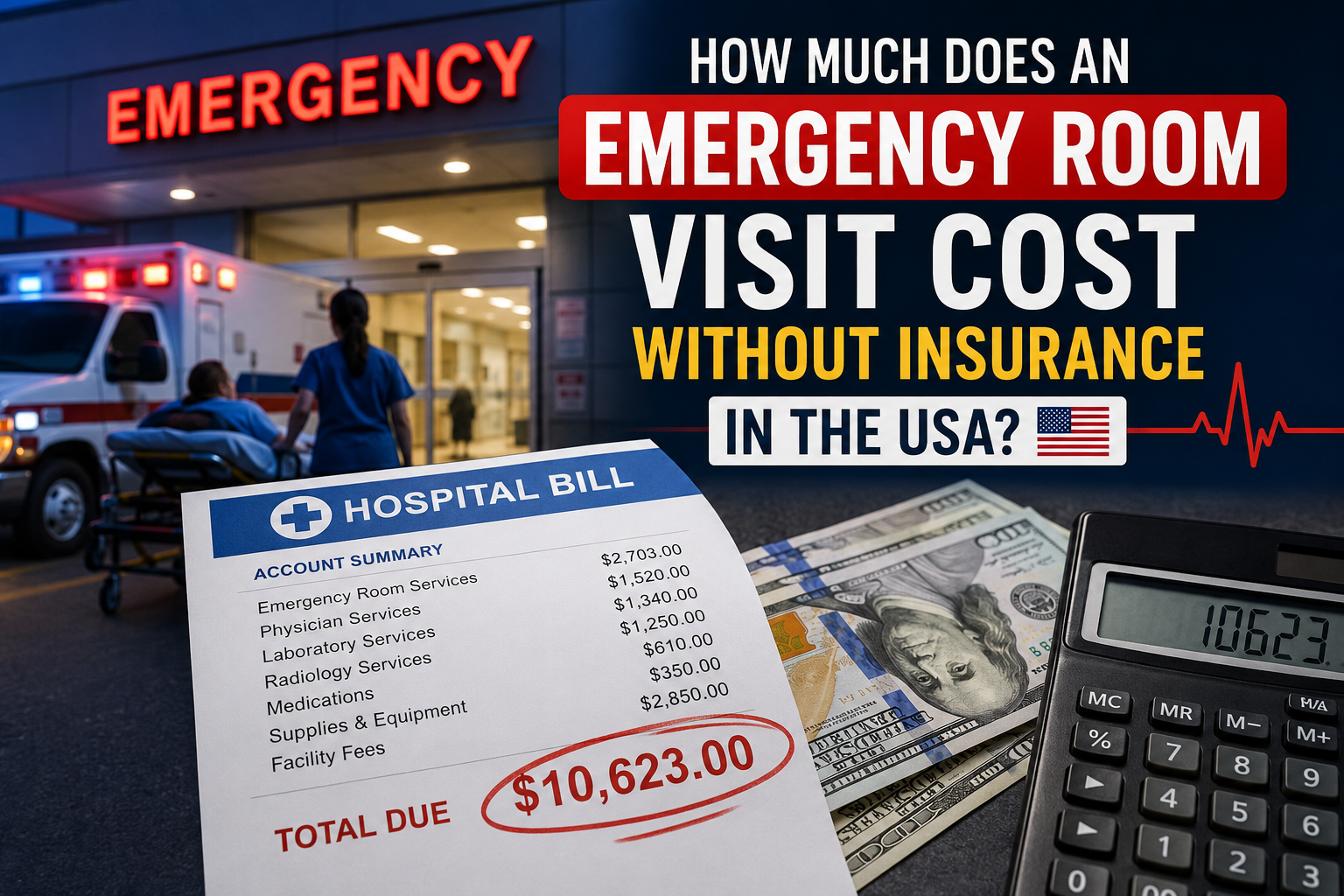
An unexpected medical emergency can happen to anyone. Whether it’s severe chest pain, a broken bone, difficulty breathing, a serious infection, or an accident, visiting an Emergency Room (ER) is often the fastest way to receive immediate medical attention. However, for millions of Americans who do not have health insurance, one of the biggest concerns isn’t just the medical condition—it’s the hospital bill that follows.
Emergency Room visits in the United States are among the most expensive healthcare services available. Unlike scheduled doctor’s appointments or urgent care clinics, ER departments operate 24 hours a day with highly trained physicians, nurses, specialists, advanced diagnostic equipment, laboratories, and life-saving technology. Maintaining this level of readiness significantly increases operational costs, which are ultimately reflected in patient bills.
Without insurance, even a relatively minor emergency can result in medical expenses ranging from several hundred dollars to several thousand dollars. More serious conditions requiring diagnostic imaging, emergency surgery, specialist consultations, intensive care, or hospital admission can easily generate bills exceeding $10,000 or even $50,000 depending on the treatment received.
Understanding how Emergency Room pricing works before an emergency occurs can help patients make informed financial decisions, recognize unnecessary charges, negotiate medical bills more effectively, and explore financial assistance programs offered by hospitals.
In this comprehensive guide, we’ll explain everything you need to know about Emergency Room costs without insurance in the United States, including average prices, common hospital charges, diagnostic testing fees, treatment costs, billing practices, payment options, and practical ways to reduce your final medical bill.
What Is an Emergency Room (ER)?
An Emergency Room, commonly referred to as the ER or Emergency Department (ED), is a specialized hospital unit designed to provide immediate treatment for life-threatening illnesses and serious injuries that require urgent medical attention.
Unlike primary care physicians or walk-in clinics, Emergency Rooms remain open 24 hours a day, seven days a week, including weekends and holidays. Hospitals maintain emergency departments with highly trained emergency physicians, trauma surgeons, nurses, respiratory therapists, laboratory technicians, radiologists, pharmacists, and support staff ready to respond to medical emergencies at any time.
Patients visiting an Emergency Room are evaluated using a medical process known as triage, where healthcare professionals determine the severity of each patient’s condition. Individuals experiencing heart attacks, strokes, severe bleeding, traumatic injuries, or breathing difficulties receive treatment before patients with less urgent medical concerns, regardless of arrival time.
Emergency Rooms are equipped to handle conditions such as:
- Chest pain or suspected heart attack
- Stroke symptoms
- Serious breathing problems
- Major fractures
- Head injuries
- Severe burns
- Poisoning
- Allergic reactions
- Severe abdominal pain
- High fever in infants
- Significant bleeding
- Seizures
- Serious infections
- Car accident injuries
- Loss of consciousness
Because Emergency Rooms provide immediate access to advanced medical technology—including CT scanners, MRI machines, X-ray equipment, operating rooms, cardiac monitoring systems, and intensive care units—the overall cost of emergency care is substantially higher than treatment received at urgent care centers or primary care offices.
How Much Does an Emergency Room Visit Cost Without Insurance?
The cost of an Emergency Room visit without insurance varies widely depending on several factors, including the hospital’s location, the severity of the medical condition, diagnostic tests performed, medications administered, physician services, and whether the patient requires admission to the hospital.
On average, uninsured patients in the United States can expect the following costs:
| Level of Care | Average Cost |
|---|---|
| Minor illness or injury | $500–$1,200 |
| Moderate emergency | $1,500–$3,500 |
| Serious emergency | $4,000–$8,000 |
| Critical emergency requiring hospitalization | $10,000–$50,000+ |
These figures represent average estimates, but actual hospital bills may be significantly higher depending on the complexity of treatment.
For example, a patient visiting the Emergency Room for dehydration may receive:
- Registration fee
- Facility charge
- Physician evaluation
- Blood tests
- IV fluids
- Prescription medications
Even without surgery or hospital admission, the total bill can easily exceed $2,000.
On the other hand, a patient arriving after a motor vehicle accident may require multiple imaging studies, orthopedic consultation, emergency surgery, anesthesia, laboratory work, medications, and several days of hospitalization, resulting in medical expenses well above $40,000.
Why Are Emergency Room Visits So Expensive?
Many patients are surprised by the size of their Emergency Room bills, especially when they spend only a few hours in the hospital. The reality is that the cost reflects far more than the time spent in a treatment room.
Hospitals maintain emergency departments around the clock, ensuring that specialized physicians, surgeons, nurses, pharmacists, laboratory personnel, radiology technicians, and emergency equipment are immediately available at any hour. This continuous readiness creates substantial operating expenses, regardless of how many patients arrive on a given day.
Another significant contributor is the facility fee. Nearly every Emergency Room visit includes a facility charge that covers the use of the emergency department, treatment space, monitoring equipment, staffing, and hospital infrastructure. This fee is separate from the physician’s professional charges and often surprises patients because it can account for a large portion of the total bill.
Diagnostic testing also increases costs quickly. Blood work, CT scans, MRIs, X-rays, ultrasounds, electrocardiograms (EKGs), and other imaging or laboratory services are billed individually. While these tests are often medically necessary to rule out life-threatening conditions, they add hundreds or even thousands of dollars to the final invoice.
Specialist consultations represent another common expense. If an emergency physician requests evaluation by a cardiologist, neurologist, orthopedic surgeon, or another specialist, those professional services are typically billed separately.
Finally, medications, IV therapy, medical supplies, wound care, splints, casts, and observation services all contribute additional charges. As a result, what begins as a seemingly straightforward Emergency Room visit can quickly become a complex bill consisting of dozens of individual line items, each with its own associated cost.
Factors That Affect Your ER Bill
Several variables determine how much an uninsured patient ultimately pays for emergency care:
- Hospital location: Urban teaching hospitals often charge more than smaller community hospitals.
- Severity of the medical emergency: More complex cases require additional staff, equipment, and treatment.
- Diagnostic testing: CT scans, MRIs, blood panels, and specialized imaging increase costs.
- Emergency physician fees: Doctors generally bill separately from the hospital.
- Specialist involvement: Consultations with surgeons or other specialists create additional charges.
- Medications and procedures: IV medications, injections, sutures, splints, casts, and wound care all add to the bill.
- Hospital admission: Being admitted after the ER visit dramatically increases total healthcare expenses.
- Length of stay: Observation or overnight hospitalization raises both facility and treatment costs.
Emergency Room Charges: A Complete Cost Breakdown
Most patients assume they receive a single bill after an Emergency Room visit. In reality, an ER bill is usually made up of several separate charges. Even if your visit lasts only a few hours, every service provided during your treatment may be billed individually. Understanding these charges can help you identify billing errors, compare costs, and negotiate your final bill if you do not have health insurance.
1. Emergency Room Facility Fee
The facility fee is one of the largest charges on almost every ER bill. This fee covers the hospital’s emergency department, medical equipment, nursing staff, treatment rooms, trauma readiness, infection control, and the overall cost of keeping the emergency department available 24 hours a day.
Unlike a doctor’s office, an Emergency Room must always be prepared to treat life-threatening conditions such as heart attacks, strokes, severe trauma, and respiratory failure. Maintaining that level of readiness requires expensive equipment and highly trained medical professionals.
Typical Facility Fee
| Emergency Level | Estimated Cost |
|---|---|
| Minor Emergency | $300–$800 |
| Moderate Emergency | $800–$2,000 |
| High Severity Emergency | $2,000–$5,000+ |
Even if your treatment is relatively simple, the facility fee alone may exceed several hundred dollars.
2. Emergency Physician Charges
Many patients are surprised to learn that the emergency physician usually bills separately from the hospital. This means you may receive two different bills—one from the hospital and another from the physician or physician group.
The physician’s fee covers:
- Medical evaluation
- Physical examination
- Diagnosis
- Treatment planning
- Medical documentation
- Follow-up recommendations
Average Physician Charges
| Service | Typical Cost |
|---|---|
| Basic ER Evaluation | $150–$400 |
| Moderate Evaluation | $400–$900 |
| Critical Care | $900–$3,000+ |
Patients with complex medical conditions generally require longer physician evaluation times, which increases professional charges.
3. Laboratory Testing Costs
Blood tests are among the most commonly ordered services during an Emergency Room visit. They help physicians diagnose infections, heart attacks, kidney disease, dehydration, electrolyte imbalances, internal bleeding, and many other conditions.
The total laboratory bill depends on the number and type of tests performed.
Common Laboratory Costs
| Test | Estimated Cost |
|---|---|
| Complete Blood Count (CBC) | $30–$150 |
| Comprehensive Metabolic Panel | $50–$200 |
| Blood Glucose Test | $20–$60 |
| Troponin (Heart Attack Test) | $100–$300 |
| Blood Culture | $100–$400 |
| COVID-19 Test | $50–$250 |
| Urinalysis | $30–$100 |
Several laboratory tests performed together can easily add hundreds of dollars to your total hospital bill.
4. X-Ray Costs
X-rays are often used to diagnose broken bones, chest infections, lung conditions, joint injuries, and certain abdominal problems.
The cost depends on the body part being examined and the number of images required.
Average X-Ray Prices
| X-Ray Type | Typical Cost |
|---|---|
| Chest X-Ray | $150–$500 |
| Hand or Foot X-Ray | $100–$300 |
| Arm or Leg X-Ray | $150–$400 |
| Spine X-Ray | $300–$800 |
5. CT Scan Costs
CT (Computed Tomography) scans provide detailed cross-sectional images that help doctors quickly identify internal injuries, bleeding, strokes, fractures, and other serious conditions.
Because CT scanners are advanced diagnostic machines requiring specialized staff and maintenance, they are one of the more expensive imaging services.
Average CT Scan Prices
| CT Scan | Typical Cost |
|---|---|
| Head CT | $500–$3,000 |
| Chest CT | $700–$3,500 |
| Abdominal CT | $800–$4,000 |
| Full Trauma CT | $2,500–$8,000 |
If contrast dye is required, additional charges may apply.
6. MRI Costs
Magnetic Resonance Imaging (MRI) provides highly detailed images of the brain, spine, joints, ligaments, muscles, and internal organs. Although MRIs are less commonly performed during emergency visits than CT scans, they may be necessary for certain neurological or orthopedic conditions.
Average MRI Costs
| MRI Type | Estimated Cost |
|---|---|
| Brain MRI | $1,000–$4,000 |
| Spine MRI | $1,200–$5,000 |
| Knee MRI | $800–$3,500 |
| Shoulder MRI | $900–$3,500 |
MRI examinations are generally more expensive than X-rays and often cost more than CT scans.
7. Medications Administered in the ER
Emergency departments stock a wide range of medications that can be administered immediately. These include pain relievers, antibiotics, IV fluids, anti-nausea drugs, allergy medications, blood pressure medications, and emergency cardiac drugs.
Unlike retail pharmacies, hospitals charge not only for the medication itself but also for storage, preparation, administration, and monitoring.
Some medications cost only a few dollars, while others—especially specialized injectable drugs—can cost hundreds or even thousands of dollars.
8. IV Therapy and Medical Supplies
Many Emergency Room patients receive intravenous (IV) fluids to treat dehydration, infections, low blood pressure, or medication delivery.
Additional supplies commonly billed include:
- IV catheters
- Sterile tubing
- Bandages
- Syringes
- Splints
- Cast materials
- Wound dressings
- Sutures (stitches)
Although each item may seem inexpensive, the combined cost of supplies and nursing time can significantly increase your overall bill.
9. Specialist Consultation Fees
If the emergency physician believes your condition requires expert evaluation, a specialist may be called to assess your case. This could include a cardiologist, neurologist, orthopedic surgeon, general surgeon, or another medical specialist.
These consultations are usually billed separately from both the hospital and the emergency physician, creating an additional expense that many patients do not anticipate.
Specialist consultation fees generally range from $300 to more than $2,000, depending on the complexity of the case and the specialist involved.
10. Observation and Hospital Admission
Not every patient leaves the Emergency Room after treatment. If doctors need additional time to monitor your condition, you may be placed under observation status or admitted to the hospital.
Observation often includes continuous monitoring, repeat laboratory testing, imaging, medications, and nursing care. A full hospital admission may involve surgery, intensive care, or several days of inpatient treatment.
Because room charges, physician services, medications, meals, and ongoing care are billed separately, total costs can increase dramatically. Even a short hospital stay after an ER visit may add several thousand dollars to the final bill, while extended admissions or intensive care can result in expenses reaching tens of thousands of dollars.