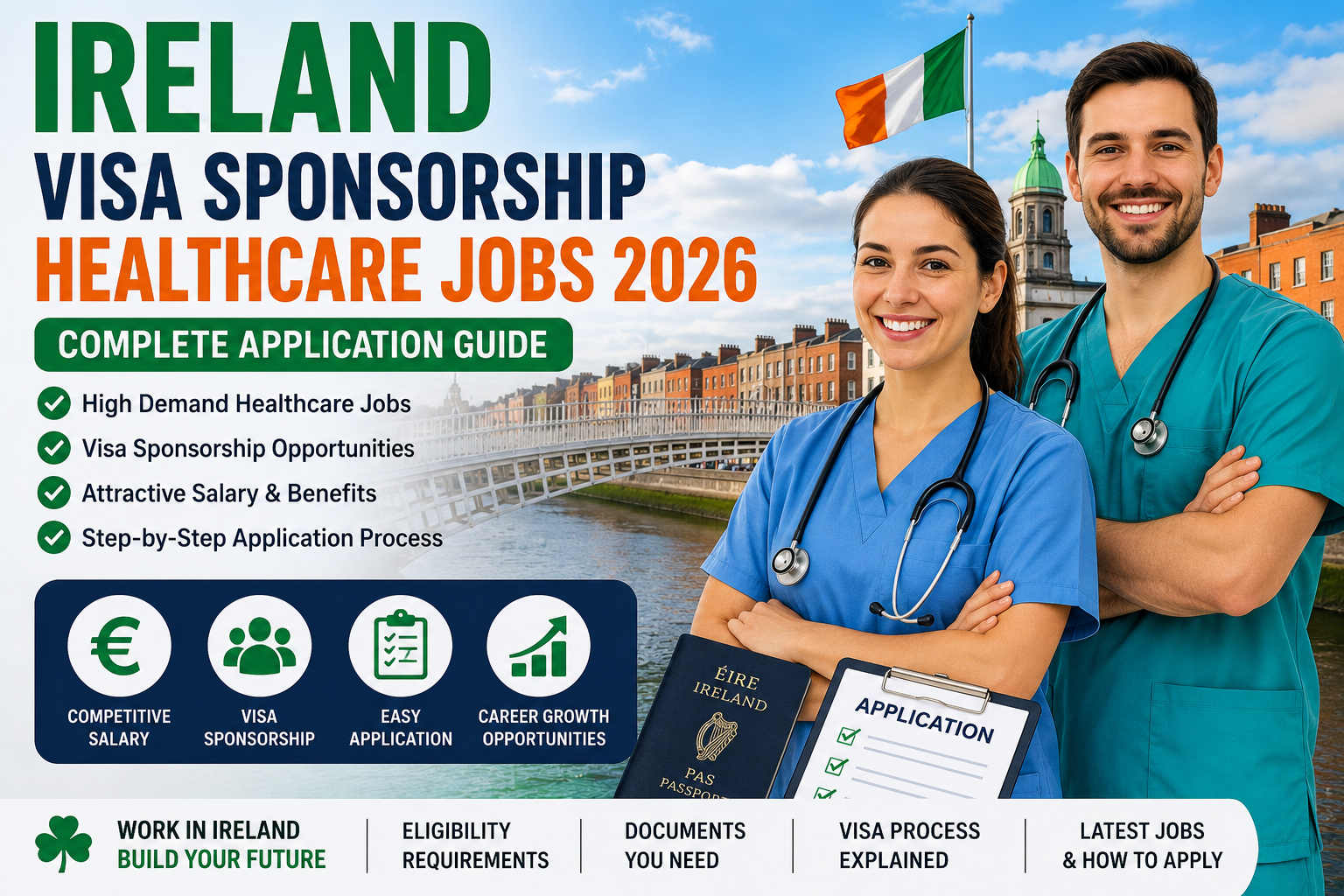
Ireland has become one of Europe’s leading destinations for international healthcare professionals. Due to an aging population, growing healthcare demands, and ongoing staff shortages, hospitals, nursing homes, disability care centers, and home care providers continue to recruit qualified healthcare workers from outside the European Union.
If you’re planning to work in Ireland in 2026, this guide covers everything you need to know—from visa sponsorship and salary expectations to eligibility requirements, employment permits, required documents, and the complete application process.
Table of Contents
- Why Ireland Needs International Healthcare Workers
- Healthcare Jobs Available with Visa Sponsorship
- Average Salary in Ireland (2026)
- Benefits of Working in Ireland
- Eligibility Requirements
- Educational Qualifications
- English Language Requirements
- Work Experience Requirements
- Employment Permits Explained
- Required Documents
- Registration Requirements
- Visa Sponsorship Process
- Step-by-Step Application Guide
- Best Employers Hiring International Healthcare Workers
- Cost of Living
- Frequently Asked Questions
Why Ireland Is Hiring Healthcare Workers in 2026
Ireland continues to experience significant shortages across hospitals, nursing homes, community healthcare services, and disability support organizations. Healthcare assistants, registered nurses, midwives, therapists, and allied health professionals remain among the occupations most frequently recruited internationally.
The Irish healthcare system actively hires overseas candidates for many roles, particularly where employers cannot fill vacancies locally. Healthcare has consistently been one of the largest sectors receiving employment permits for non-EU workers.
Healthcare Jobs That Commonly Offer Visa Sponsorship
International candidates may find opportunities in both public and private healthcare organizations.
| Job Position | Average Annual Salary |
|---|---|
| Registered Nurse | €38,000 – €58,000 |
| Healthcare Assistant | €28,000 – €38,000 |
| Elderly Care Assistant | €28,000 – €40,000 |
| Midwife | €45,000 – €65,000 |
| Physiotherapist | €42,000 – €60,000 |
| Occupational Therapist | €40,000 – €58,000 |
| Radiographer | €42,000 – €60,000 |
| Medical Laboratory Scientist | €40,000 – €58,000 |
| Social Care Worker | €35,000 – €52,000 |
Actual salaries depend on qualifications, employer, overtime, location, and years of experience.
Average Monthly Salary
Healthcare professionals in Ireland generally receive competitive salaries along with pension contributions, paid annual leave, overtime, and shift allowances.
Approximate monthly earnings:
- Healthcare Assistant: €2,300–€3,100
- Registered Nurse: €3,200–€4,800
- Senior Nurse: €4,500–€6,000
- Physiotherapist: €3,500–€5,000
- Medical Laboratory Scientist: €3,400–€4,800
Night shifts, weekends, and public holidays usually attract additional payments.
Benefits of Working in Ireland
Besides salary, healthcare workers often receive valuable employment benefits.
Common benefits include:
- Visa sponsorship for eligible roles
- Paid annual leave
- Public holiday pay
- Overtime compensation
- Pension contributions
- Health insurance options
- Paid maternity and paternity leave
- Continuous professional development
- Career progression opportunities
- Family reunification possibilities for eligible workers
Many employers also provide relocation assistance for experienced international recruits.
Who Can Apply?
Applicants usually need to satisfy both employer requirements and Irish immigration rules.
Most employers look for candidates who have:
- Relevant healthcare qualification
- Professional experience
- Good English communication skills
- Valid passport
- Clean criminal record
- Medical fitness
- Eligibility for professional registration where required
Meeting minimum requirements does not automatically guarantee visa sponsorship, as recruitment depends on employer needs.
Educational Requirements
The educational requirement depends on the position.
Typical qualifications include:
- Diploma in Nursing
- Bachelor of Nursing
- Bachelor of Physiotherapy
- Medical Laboratory Science Degree
- Occupational Therapy Degree
- Healthcare Assistant qualification
- Elderly Care certification
Employers usually ask applicants to provide officially translated educational documents if they were issued in another language.
English Language Requirements
Since English is the primary working language in Ireland’s healthcare system, applicants are generally expected to demonstrate good communication skills.
For regulated professions such as nursing, employers and professional regulators may require evidence of English proficiency through accepted tests where applicable. Commonly accepted qualifications include IELTS or OET, depending on registration requirements.
Work Experience
Although some entry-level care roles may consider applicants with limited experience, most employers prefer candidates who have practical healthcare experience.
Preferred experience includes:
- Hospital nursing
- Elderly care
- ICU
- Emergency care
- Surgical wards
- Home care
- Disability care
- Community healthcare
One to two years of relevant experience often strengthens an application.
Employment Permits
Most non-EU healthcare workers require an Irish employment permit before working legally.
The two main permit categories are:
Critical Skills Employment Permit
This permit is generally intended for occupations experiencing skill shortages, including many qualified healthcare professions. It offers a pathway that can lead to long-term residence for eligible workers.
General Employment Permit
Some healthcare occupations that are not covered by the Critical Skills route may qualify under the General Employment Permit, provided the employer and job meet the required conditions.
Required Documents
Applicants should prepare the following:
- Valid passport
- Professional CV
- Cover letter
- Educational certificates
- Academic transcripts
- Professional licenses
- Employment certificates
- English language certificate (if required)
- Police clearance certificate
- Medical examination report
- Passport photographs
- Employment contract or job offer
Employers may request additional documents depending on the role.
Professional Registration
Certain healthcare professions require registration with the appropriate Irish regulatory body before practicing.
For example:
- Registered Nurses
- Midwives
- Physiotherapists
- Occupational Therapists
- Radiographers
- Medical Laboratory Scientists
Healthcare assistants generally follow employer-specific qualification requirements rather than professional registration.
Visa Sponsorship Process
The process usually follows these steps:
Step 1
Find a healthcare employer actively recruiting international candidates.
Step 2
Submit your application with an updated CV and supporting documents.
Step 3
Attend online interviews.
Step 4
Receive a formal job offer.
Step 5
The employer assists with the employment permit application where applicable.
Step 6
Apply for your Irish work visa if required.
Step 7
Travel to Ireland and complete registration formalities after arrival.
How to Apply Successfully
A strong application significantly improves your chances.
Follow these recommendations:
- Create a professional CV tailored to Irish employers.
- Highlight patient care experience.
- Include certifications and licenses.
- Mention English language proficiency.
- Explain your willingness to relocate.
- Prepare references from previous employers.
- Apply only through reputable employers or established recruitment channels.
Many healthcare vacancies specifically mention whether visa sponsorship is available.
Employers That Frequently Recruit International Healthcare Workers
Healthcare recruitment varies throughout the year.
International candidates commonly find opportunities with:
- Public hospitals
- Private hospitals
- Nursing homes
- Home care agencies
- Community healthcare providers
- Disability support organizations
- Rehabilitation centers
Openings change frequently depending on workforce demand.
Cost of Living
Before accepting a job offer, candidates should evaluate living expenses.
Typical monthly costs include:
| Expense | Approximate Cost |
|---|---|
| Rent | €900–€2,000 |
| Food | €250–€450 |
| Transport | €100–€180 |
| Utilities | €120–€220 |
| Internet & Mobile | €40–€70 |
Costs vary significantly between Dublin and smaller cities.
Tips for Getting Selected
You can improve your chances by:
- Learning about the Irish healthcare system.
- Improving spoken English.
- Preparing a professional CV.
- Obtaining relevant certifications.
- Applying to multiple employers.
- Being flexible regarding location.
- Preparing thoroughly for online interviews.
Common Reasons Applications Get Rejected
Some avoidable mistakes include:
- Incomplete documents.
- Poor CV formatting.
- Missing professional registration.
- Low English proficiency.
- Applying for roles outside your qualifications.
- Unverified employment history.
Frequently Asked Questions
Can foreigners get healthcare jobs in Ireland with visa sponsorship?
Yes. Many healthcare employers recruit qualified international candidates and may support visa sponsorship for eligible positions, depending on the role and immigration requirements.
Is IELTS mandatory?
It depends on the profession and registration requirements. Many regulated healthcare professions require proof of English proficiency, while some support roles may have different employer requirements.
What is the average nurse salary?
Registered nurses commonly earn between €38,000 and €58,000 annually, with higher earnings possible through experience and additional shift allowances.
Do healthcare assistants receive sponsorship?
Some employers sponsor healthcare assistants when recruitment needs cannot be met locally, although eligibility varies by employer and permit requirements.
Can I bring my family?
Some employment permit holders may later qualify for family reunification, subject to Irish immigration rules and individual circumstances.
Conclusion
Ireland remains one of the most attractive destinations for healthcare professionals seeking international careers in 2026. Strong demand across hospitals, nursing homes, and community care services continues to create opportunities for qualified overseas candidates. By meeting education, registration, language, and immigration requirements—and applying through legitimate employers—you can improve your chances of securing a healthcare job with visa sponsorship and building a long-term career in Ireland.